
Holiday PC sales are expected to plunge due to memory shortages
Summary created by Smart Answers AI
In summary:
- PCWorld reports IDC forecasts a 20% decline in Q4 2026 PC sales due to persistent DRAM and NAND flash memory shortages driving component costs higher.
- AI hyperscalers are significantly increasing demand for NAND memory, boosting revenues 3.5 times and creating supply constraints that affect consumer PC pricing.
- Average PC selling prices are expected to rise 17% in 2026, though competitive models like the MacBook Neo and Dell XPS 13 are creating some pricing pressure.
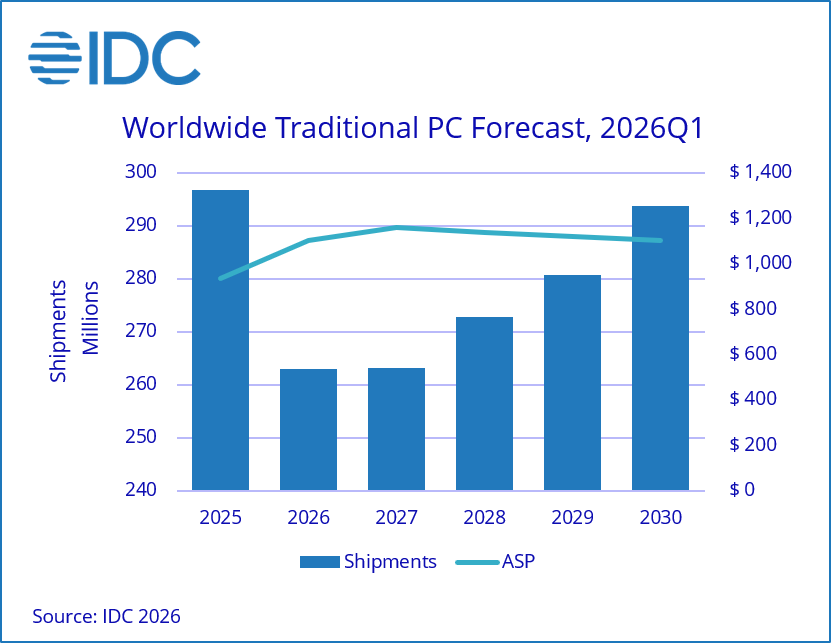
We all knew that the steady increase in PC component prices would have an effect on PC sales. Now, the effects are becoming more clear: IDC is predicting that PC sales will fall 20 percent during the fourth quarter of 2026, at the time that they’re usually highest.
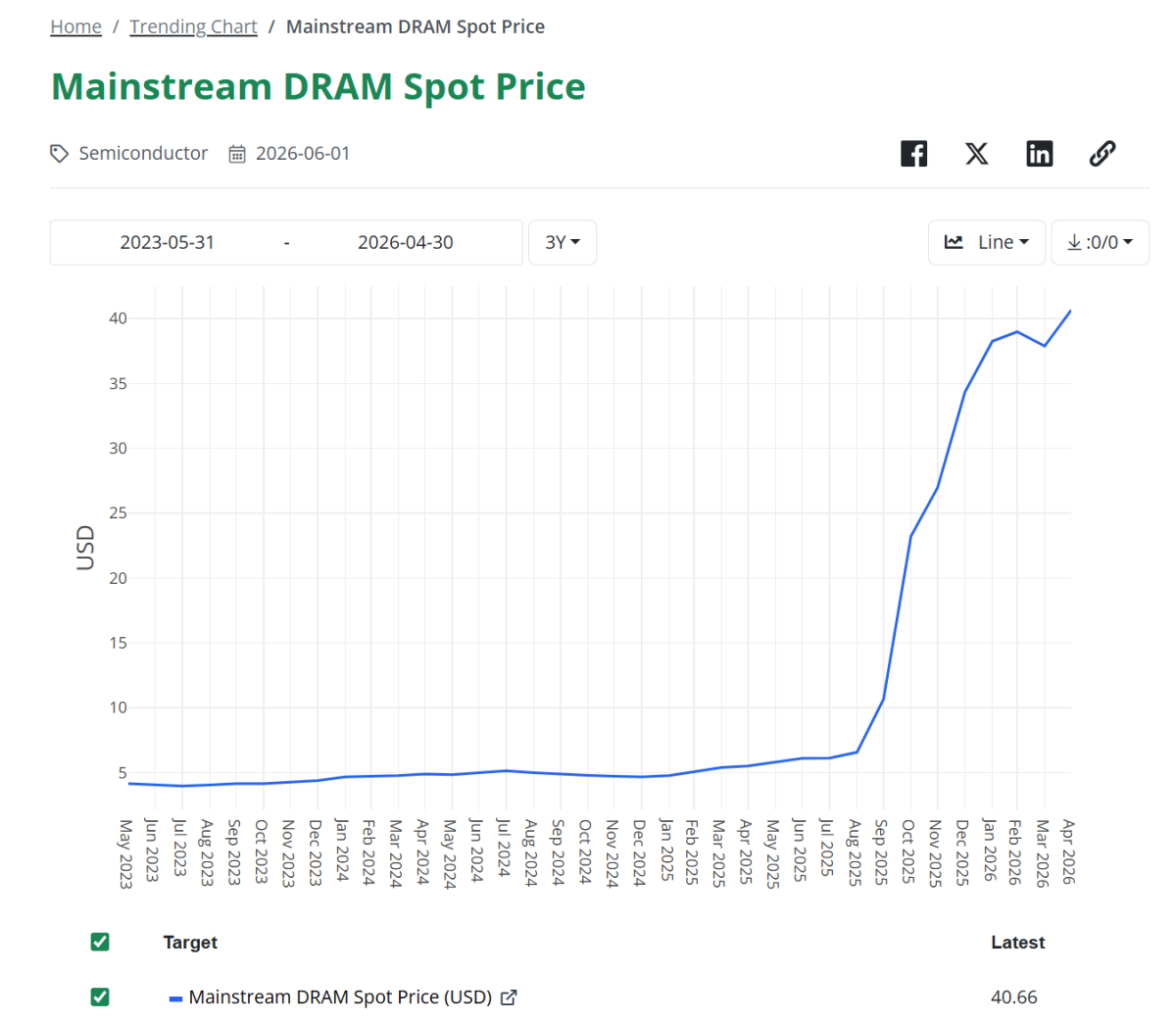
There’s no secret why: a persistent memory shortage, which encompasses both DRAM as well as the NAND flash memory underlying SSDs. In the latter segment, Counterpoint Research just added another data point: NAND memory revenues shot up an incredible 3.5 times higher during the first quarter of 2026, versus a year ago. That’s all due to the incredible demands being put on the industry by AI hyperscalers, and the corresponding effects on component pricing.
For the PC market, the first quarter of 2026 was the (final) calm before the storm, IDC said. PC sales actually nudged up 3 percent, due to consumers as well as commercial buyers grabbing the last bargains they could. IDC still says that you’ll be able to find some of those discounts as the current second quarter winds down…and then things could get really bad.
IDC didn’t call out the popular “K-shape” metaphor, where premium goods and services are being priced higher and higher to lure in the wealthy, while a growing lower class of users struggles to survive. But the analyst firm did identify the Apple MacBook Neo as a viable savior of the PC ecosystem, serving as a force to pressure at least some prices lower. The Dell XPS 13, priced at $599 for students and $699 for general consumers, falls into this category as well.
“The introduction of the MacBook Neo is putting real pressure on the entire PC ecosystem,” said Jitesh Ubrani, research manager for IDC’s Consumer Devices Trackers, in a statement. “We expect vendors to respond with a combination of new silicon, a more efficient OS from Microsoft, and aggressive promotional pricing.”
But that’s not going to stop a general uptick in pricing. Call it inflation, call it simple economics, but IDC expects you’re going to pay more.
“The competitive pressure from the Neo is providing a partial offset to broader price increases, keeping some low-cost notebook options alive,” Ubrani added. “But the overall trajectory for average selling prices (ASPs) is firmly upward. IDC forecasts ASP growth of 17 percent in 2026, and even as memory capacity expands over the next two years, pricing is unlikely to return to 2025 levels.”
My tests on a 7-year-old laptop recently were meant to help readers understand whether they’ll see real gains by spending a lot more money on a new laptop, versus keeping and using an older one. A new laptop naturally brings with it gains in productivity, but not for everyone. My article provides some clarity on the gains you can expect from new hardware — from boot times to the time it takes to calculate formulas in Excel — to help consumers decide whether to make the leap.
Is there hope? Maybe.
YMTC, a relatively unknown Chinese NAND flash maker, only supplies 13 percent of the memory used by the market. But it’s eyeing an IPO soon, which should give it access to extra capital to invest in manufacturing. More manufacturing means more supply, which could help move prices lower.
“If YMTC secures extra capital through this IPO, it will be fully equipped to scale up operations,” Counterpoint analyst MS Hwang wrote in a research note. “Under this scenario, we expect YMTC to surpass both Kioxia and Micron, widen its lead to emerge as the world’s No. 3 NAND player.”
Still, it very much looks like any “deals” you find this holiday season could be the “gotchas” of years past: discounts, yes — but discounts on prices that are higher than they should be. The difference could be that instead of playing pricing games, retailers might simply be working with what the market has handed them. And boy, does it stink.
