
Investigation: Are RAM prices dropping, or is it all illusion?
Rising prices are the biggest tech story of 2026. Well, the biggest consumer tech story, anyway — the biggest story in a broader sense is “AI” in general. And that’s the answer to why prices are going up.
Memory manufacturing capacity, and future capacity, is sold through due to “AI” data centers. There’s almost nothing left for consumer-level RAM and storage fabrication. Prices for RAM, finished computers, storage, game consoles, phones, even products as innocuous as SD cards are rising higher and higher. It’s a terrifying development for PC enthusiasts on the hunt for more performance.
But something weird happened in the last month or two. Prices for RAM and storage flattened out, for some products, in some markets. A few of them even went down. Europe and China are two places where the trend seems to be stalling or reversing. The latter could be explained by local memory manufacturers (beyond the “big three,” Samsung, SK Hynix, and Micron), but we’re starting to see prices flatten even in the States, beset by import taxes as we are.
Good news! PC builders who are willing to buy a RAM bundle with a motherboard and processor might be able to find a little price relief, even though you’re still deep in the red compared to just a year ago. But there’s bleak news as well: PCWorld spoke with numerous PC industry analysts and vendors who warn we’re (probably) far from the end of the memory crisis despite momentary price softening.
Table of Contents
Have RAM prices really peaked?
PCPartPicker has an excellent at-a-glance view of the market for consumer-packaged RAM, with data aggregated across lots of packages, stores, and currencies.
Let’s take a look at a 16GBx2 DDR5 setup, which I think would be a fair middle ground to shoot for as a DIY PC builder (or at least it would be in a normal market). We can see prices shoot up for the last quarter of 2025, an astonishing 400 percent rise…and then broadly flat this year, with a little bit of a rise this month. Here it is in US dollars:
Prices have been mostly similar for the UK and Canada, but in mainland Europe and Australia, we can actually see a small dip in prices from a high at the beginning of 2026.
What’s going on here? We were told to expect a supply crunch for at least another year, possibly multiple years. Are we through the worst of it? And if so, why?
An AI bubble, unpopped
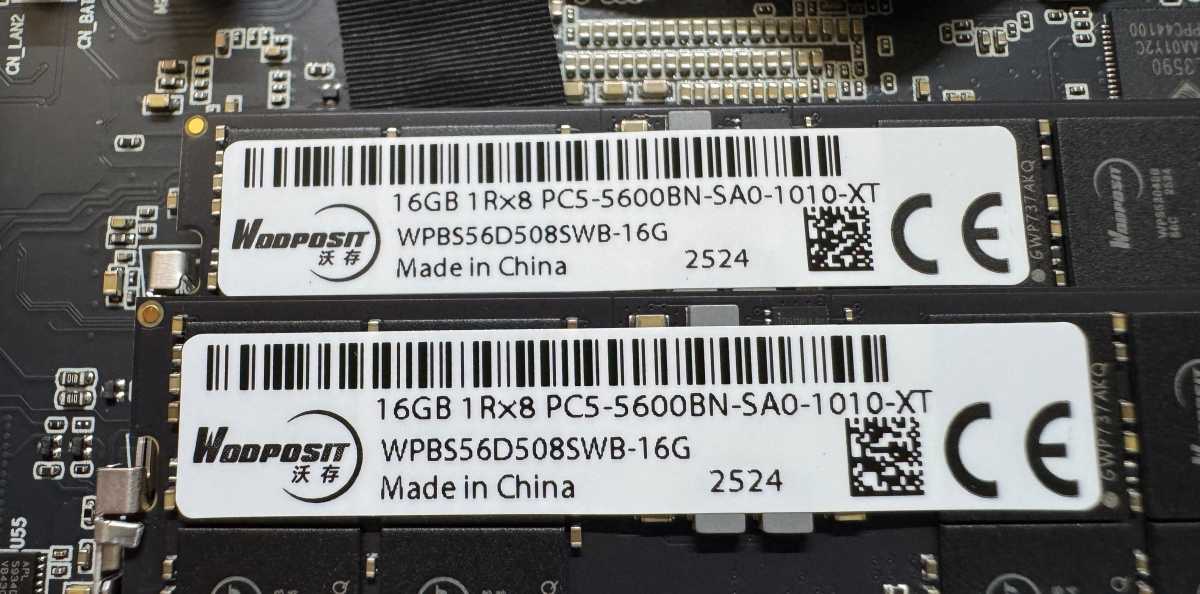
There have been a few explanations put forward as to why the memory crunch might be peaking, or even reversing. Demand for new data center construction is almost certainly going down due to a variety of factors. Up to half of the new data centers planned for the US have been cancelled or delayed, for several reasons: lack of electrical grid capacity, regular consumer (and voter) pushback against rising energy prices and environmental impact, and what appears to be a pull-back from investors who are wary of an “AI” investment bubble.
The bubble hasn’t popped by any means — if it had, we’d see an economic recession or full-on depression, as trillions of dollars invested suddenly disappeared. (And we’d all have a lot more to worry about than computer parts.) But other factors seem to be resisting the unprecedented rise in demand. Smaller Chinese manufacturers are expanding their capacity to offer memory to both their own gigantic domestic market and major international players like Lenovo, Dell, and HP. It’s possible that data centers themselves could get slightly less hungry for memory, as new large language model advancements become more efficient.
Even OpenAI, the biggest kid on this particular playground, has cancelled its highly visible Sora video generation tool along with a billion-dollar Disney deal. Apparently it simply couldn’t be made profitable.
Christoph Hoffmann
So what’s with the flat prices, or even reduced prices? We aren’t out of this mess, but consumers could hope we’re reaching equilibrium at a “new normal,” with apologies if that term brings back some bad pandemic memories. At the very least, maybe we can plan out pricing for RAM and storage, and get used to a lower level of performance without a new case of sticker shock every week.
Or not. Tom Mainelli, VP of Device & Consumer Research at IDC, agrees that price increases are slowing. “But it’s too early to say they’ve peaked,” he told me. “Because of the shortage, some SKUs saw pricing rise above what the market would support. In those cases, we sometimes see a pause or even some reversal. However, we are still far from normalization, and the supply crunch is ongoing.”
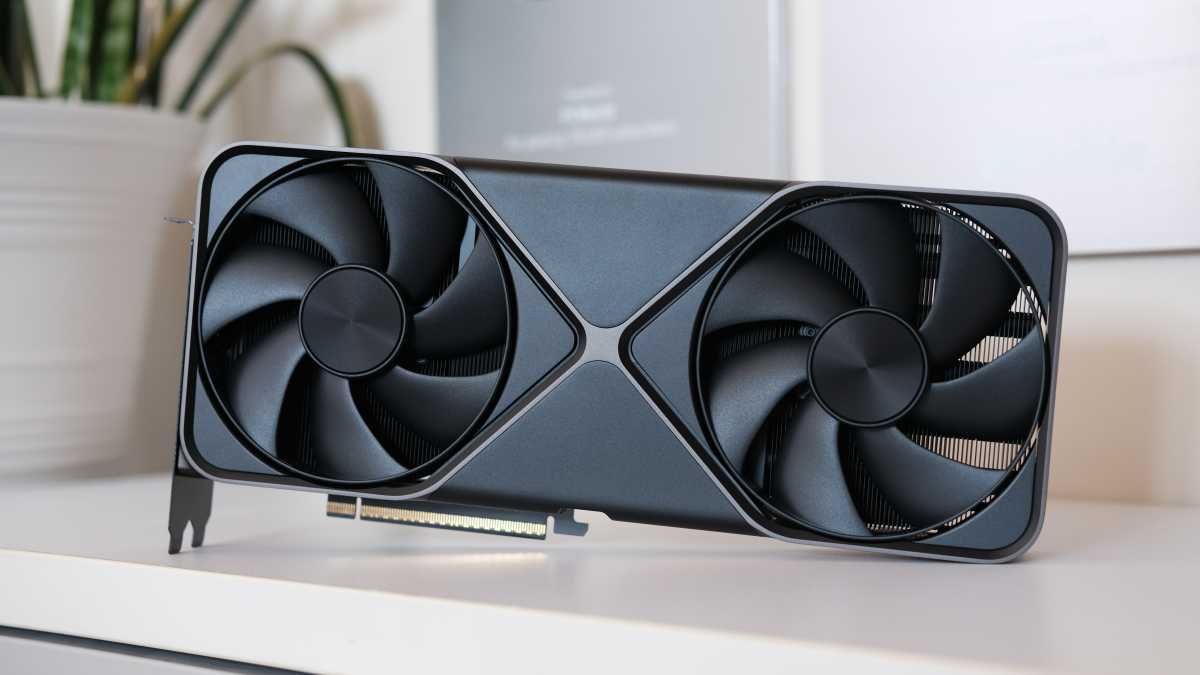
That possibility had occurred to me before I put out a call for analyst comment. “Scalper” is an unpleasant term, but the immutable laws of the market make it a familiar one for PC builders, who are always aware of those who buy in-demand, high-performance parts to try and turn them around for a quick buck. Scalpers were all over GPUs during the shortages in the pandemic and the crypto boom, and they’re always a possibility when a new product launches. (Just ask anyone who collects Magic: The Gathering cards, and watch them wince.)
Adam Patrick Murray / Foundry
If scalpers — both independent and those that operate stores on third-party markets like Amazon and Newegg — got a little too greedy during the supply crunch, then had to adjust their prices back down, it would explain a short reversal without a full return to more sane prices.
Dave Altavilla, principal analyst at HotTech and the founder of HotHardware, had a similar answer. “What we’re seeing right now is a classic inventory and demand elasticity effect layered on top of a structurally tight market.” In layman’s terms, supply and demand. “…Some recent price softness appears tied to localized inventory pressure in distribution channels, particularly in secondary markets, rather than a broad easing of supply constraints.”
Altavilla also pointed to softening consumer demand in response to higher prices, and smoothed-out purchases from OEMs. Which brings us to the topic of manufacturers.
Prices on PCs and other electronics are still going up, up, up
Indeed, if you look at the market for finished devices, the big manufacturers don’t seem to be anticipating a return to normality anytime soon. Microsoft, Asus, Lenovo, Samsung, Motorola, all of them are either raising prices on existing devices (a shocking buck of historical trends) or announcing new systems with much higher prices than we might expect.
The only outlier is Apple, with its smash hit MacBook Neo. With just 8GB of RAM and a repurposed iPhone processor in the $600 laptop, Apple is uniquely positioned to take advantage of unprecedented consumer strain and trepidation.
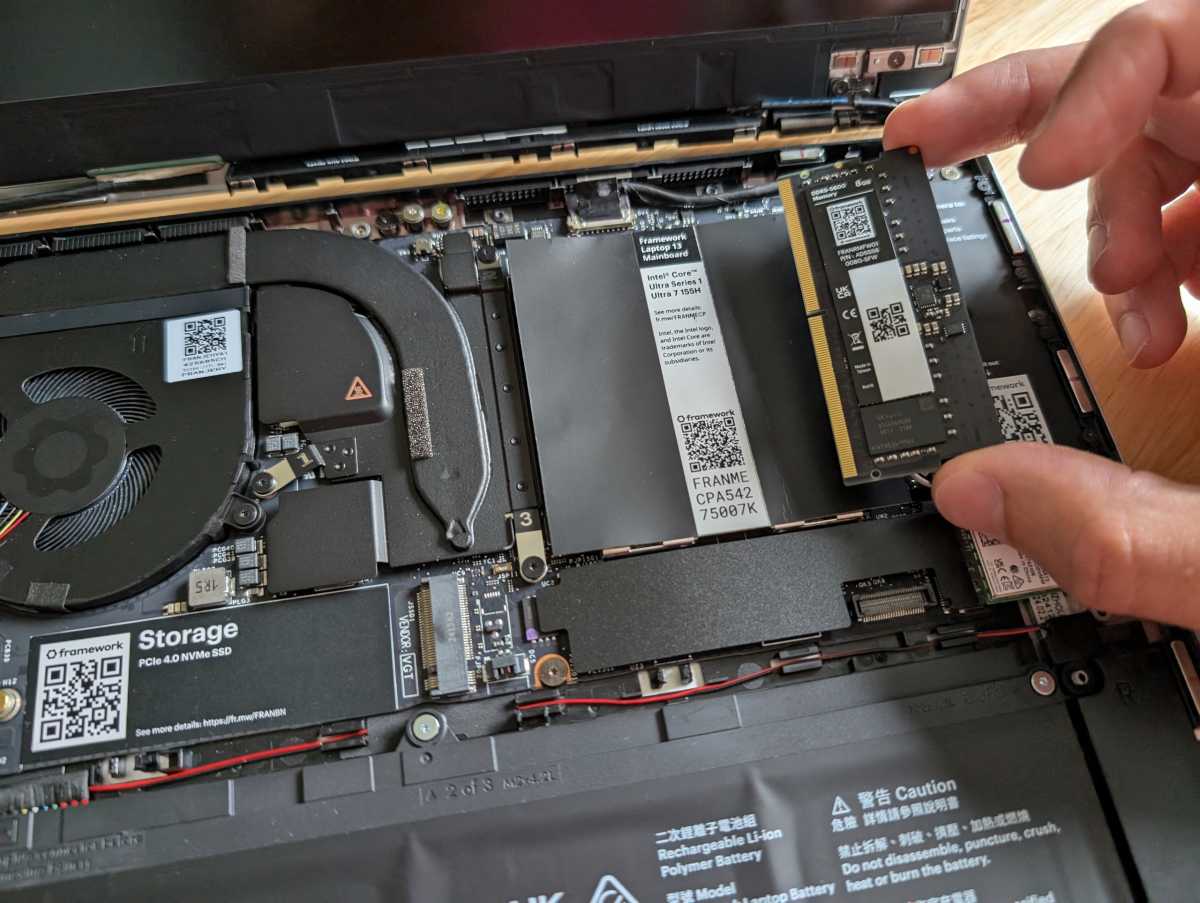
The situation is so bad that Framework, poorly insulated from market swings as a smaller manufacturer, issued a defiant rallying cry last week…but it read more like despair. “There is a very real scenario in which personal computing as we know it is dead,” said CEO Nirav Patel, as he invoked a phrase coined by the World Economic Forum but more broadly and cynically applied to a tech world addicted to subscriptions and enshittification. “…The industry is asking you to own nothing and be happy.”
IDG / Chris Hoffman
If you want proof that the RAM crunch isn’t going anywhere, look no further than the home game console market. Both the Xbox and the PlayStation have had huge price jumps for existing hardware, sans any kind of upgrade, more than five years into a console generation. That’s the first time that’s ever happened in my lifetime. Just this week Meta raised the price on a years-old Quest VR headset design.
Patrick Moorhead of Moor Insights & Strategy doesn’t anticipate any kind of market-wide reversal in prices for the next year and change. “It takes three or four years to build a memory fab [factory] and get volume out of it. Between 2022 and 2023, all memory makers had negative gross margins and then stopped investing.”
For context, OpenAI released ChatGPT in November of 2022, firing the starter pistol for our current investment binge. Moorhead explains that you need approximately quadruple the memory dies for high-bandwidth memory (HBM, the expensive stuff going into data centers) compared to consumer DRAM.
“The situation should start getting better in Q4 2027, but I don’t think we will be normalized until 2030, given the pace of datacenter AI demand,” he says.
No silver linings yet
There are a few holes in the theories of why the prices might have peaked, too. Google’s TurboQuant compression algorithm made headlines for reducing LLM memory demands by as much as 600 percent. But analysts at TrendForce think that will simply spur the most demanding users of LLMs to expand their usage on the same amount of tokens, possibly even trying to shift more workload on “AI” instead of less.
Imagine an addict finding a cheaper supply of whatever it is they crave. Do they take advantage of lower prices to save money…or spend just as much and increase their consumption? And while OpenAI pressed pause on “AI” video generation, its competitors haven’t — Google is still pushing hard on its Veo model, for instance.
Data center rollout might have hit a speed bump, but it’s not stopping by any means. Builders seem to be shifting away from population centers, and the pesky human residents that they come with, for more and more rural construction. This comes with even more energy grid strain…but that’s a problem that has creative solutions. Like strapping jet engines to the ground and burning fuel to power servers. What few residents complain can be ignored, or dealt with via tools like eminent domain.
When I started seeing headlines about RAM and storage prices going down, I had hoped that an investigation would show me some light at the end of the tunnel. I regret to report no such light. A small and limited correction, possibly scalpers and resellers adjusting their profiteering slightly downward, is the most rational explanation. The rest of 2026 doesn’t appear to be any more friendly to us mere mortals looking for PC hardware.
