
Lenovo’s fanless laptop makes AirJet feel real at last
Here’s what the AeroBlade concept means: By using Frore’s solution, Lenovo can eliminate traditional fans and therefore shave off weight (from the traditional heat pipe) and reduce noise. It’s also a critical validation of Frore’s tech as a viable laptop cooling mechanism. Solutions like the AirJet should usher in a new wave of truly thin-and-light laptops, and that matters. This is Lenovo—not every prototype comes to market, but the majority of them do. This is a transformative technology.
So, Lenovo’s Project AeroBlade promises to be the lightest 14-inch laptop on the market, right? Well, no. But it may be the better device.
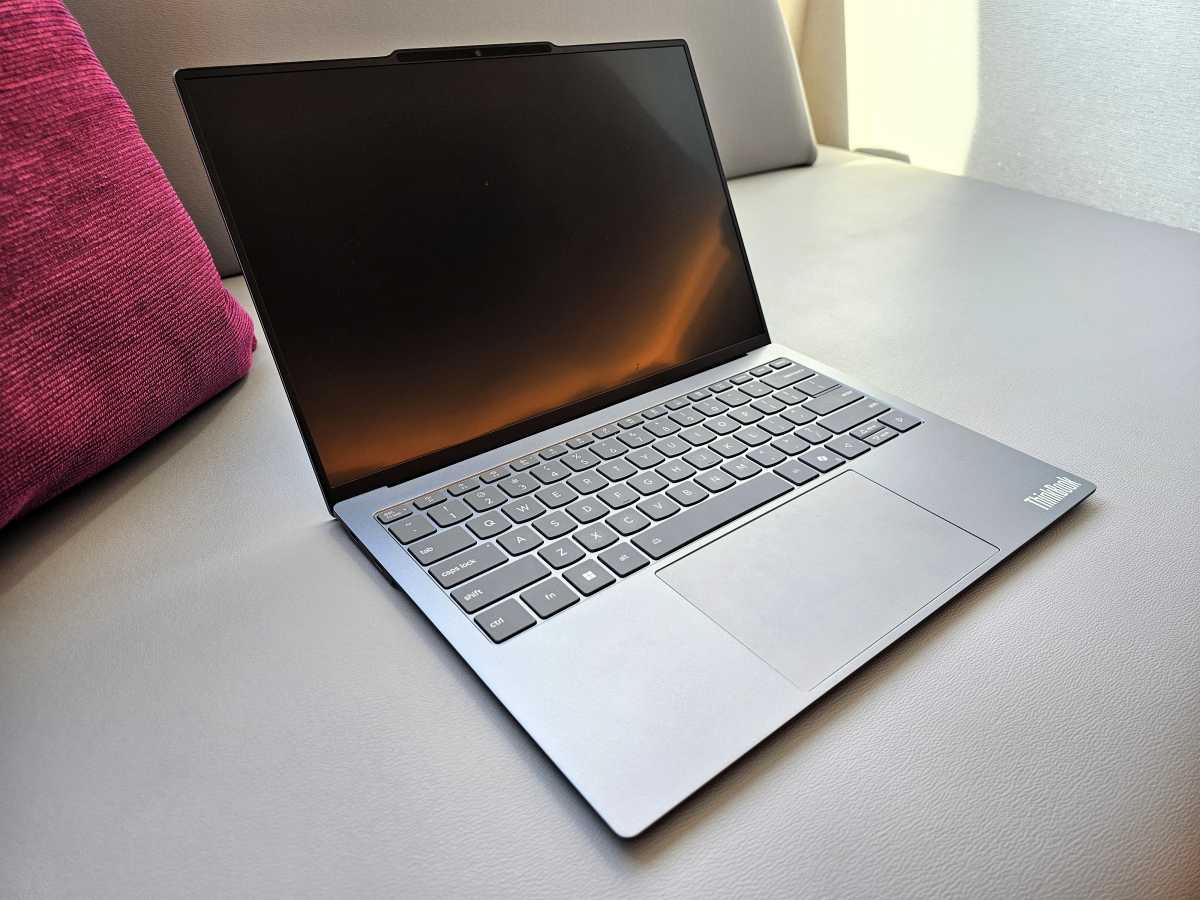
Mark Hachman / Foundry
This week at IFA, Acer announced the Swift Blade, a 14-inch laptop weighing 0.8kg (1.76 pounds). Lenovo’s AeroBlade concept weighs “under 830g [1.83 pounds],” according to the company. Put another way, that’s about the weight of a full 24oz refillable water bottle.
There’s a key difference, however. Acer is basing its Swift Blade on Intel’s “Wildcat Lake” processor, the Core 7 350, which performed capably but not competitively in my review of the Lenovo IdeaPad Slim 3i, which used the same chip. Lenovo’s AeroBlade will be based on Intel’s older Core Ultra 200 (“Lunar Lake”) chip, which outperforms all other x86 chips in terms of battery efficiency, based on my tests of the Snapdragon X2 Elite.
We don’t know which Core Ultra 200 chip Lenovo will eventually include, but the Lunar Lake architecture includes four performance cores to Wildcat Lake’s two, and it can reduce the total core count. Based on numbers alone, the AeroBlade is likely to be more powerful and power-efficient.
Since it’s just a concept, Lenovo isn’t revealing much. I was able to wave the AeroBlade around and marvel at how easy it is to carry. The keyboard felt solid, though not especially great, and we weren’t able to power the device on to check the processor or even if the device sounded “fanless” even under load.
