
Microsoft’s Surface Laptop Ultra could be your killer PC upgrade
Summary created by Smart Answers AI
Table of Contents
In summary:
- PCWorld reports on Microsoft’s new Surface Laptop Ultra, featuring Nvidia’s N1X chip with 20 CPU cores and 6,144 Blackwell GPU cores for powerful AI performance.
- The device offers 128GB shared RAM and can run AI models up to 120 billion parameters, positioning it as Microsoft’s fastest Surface for gaming and content creation.
- Expected in 2026, the Ultra includes a 15-inch mini-LED display with 2,000 nits brightness and represents Microsoft’s major entry into high-performance AI computing.
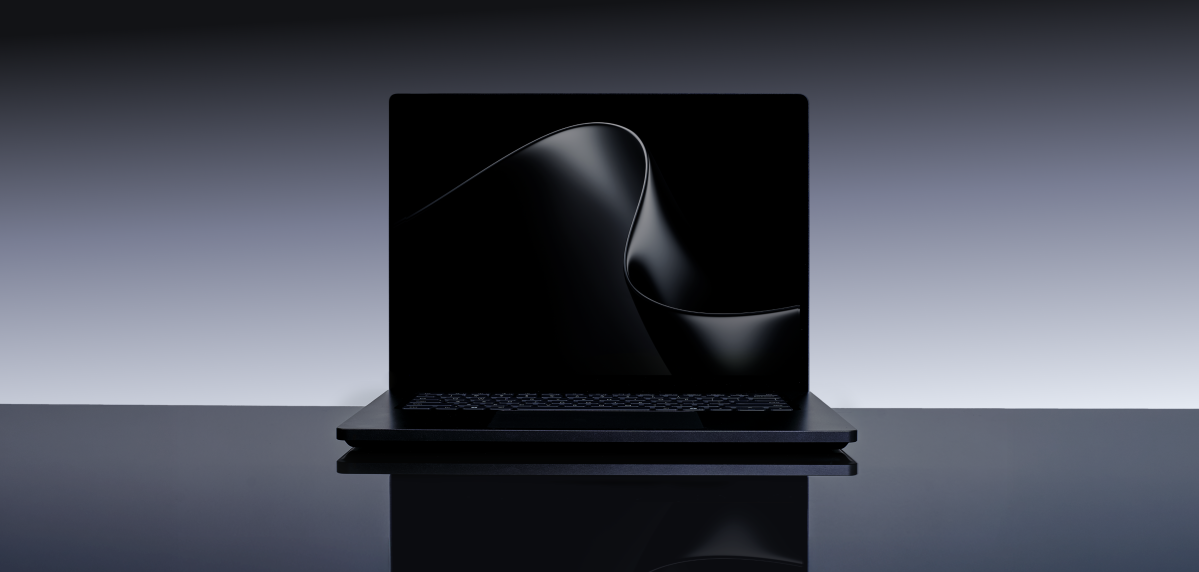
Microsoft’s surprise launch of the new Surface Laptop Ultra, based on Nvidia’s RTX Spark platform, is definitely worth talking about. Everything about this machine suggests an exciting reboot of the Surface lineage.
The new 15-inch Surface Laptop Ultra laptop is designed around Nvidia’s just-announced N1X and N1 processors, which are the foundation of the Nvidia RTX Spark platform that’s been expected for literally years now.
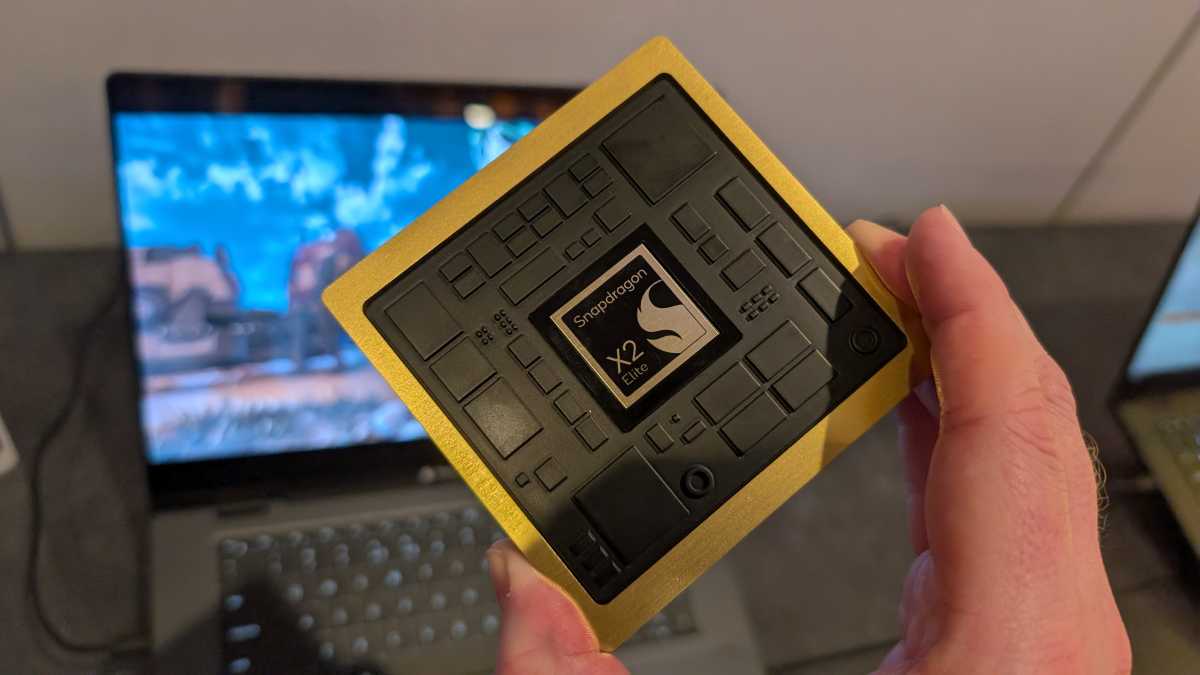
Though the RTX Spark platform is similar to Qualcomm’s Snapdragon X2 Elite Extreme in that they’re both Windows on Arm processors, the highest-end configuration of the N1X family includes a whopping 20 CPU cores and 6,144 Blackwell GPU cores, or up to a petaflop of AI performance. This is GPU power that markedly advances the Windows on Arm game, pitting Nvidia against Qualcomm in a battle for laptop users attention.
The Surface Laptop Ultra is the fastest Surface Microsoft has ever made, according to Brett Ostrum, Microsoft’s corporate vice president of Surface. The machine should slot in as a replacement to the Surface Laptop Studio 2 and the defunct Surface Book as Microsoft’s premium, GPU-rich laptop. The Ultra is designed for gaming, content creation, and yes, massive local AI models (120 billion parameters!) with its 128GB of shared memory.
For context, those 6,144 Blackwell cores equal the Blackwell cores in an RTX 5070 desktop GPU. In a laptop, its sits somewhere between the 5,888 cores of a RTX 5070 Ti and the 7,680 cores of an RTX 5080. To date, the most powerful laptop Microsoft has shipped has been 2023’s Surface Laptop Studio 2, with an RTX 4070 inside.
It’s now three years later, and Microsoft has slid back into the laptop race yet, adding graphics and AI to its ongoing conversation about productivity. The Surface Laptop Ultra will ship this fall, according to the company.
Microsoft
What makes the Surface Laptop Ultra an ‘Ultra?’
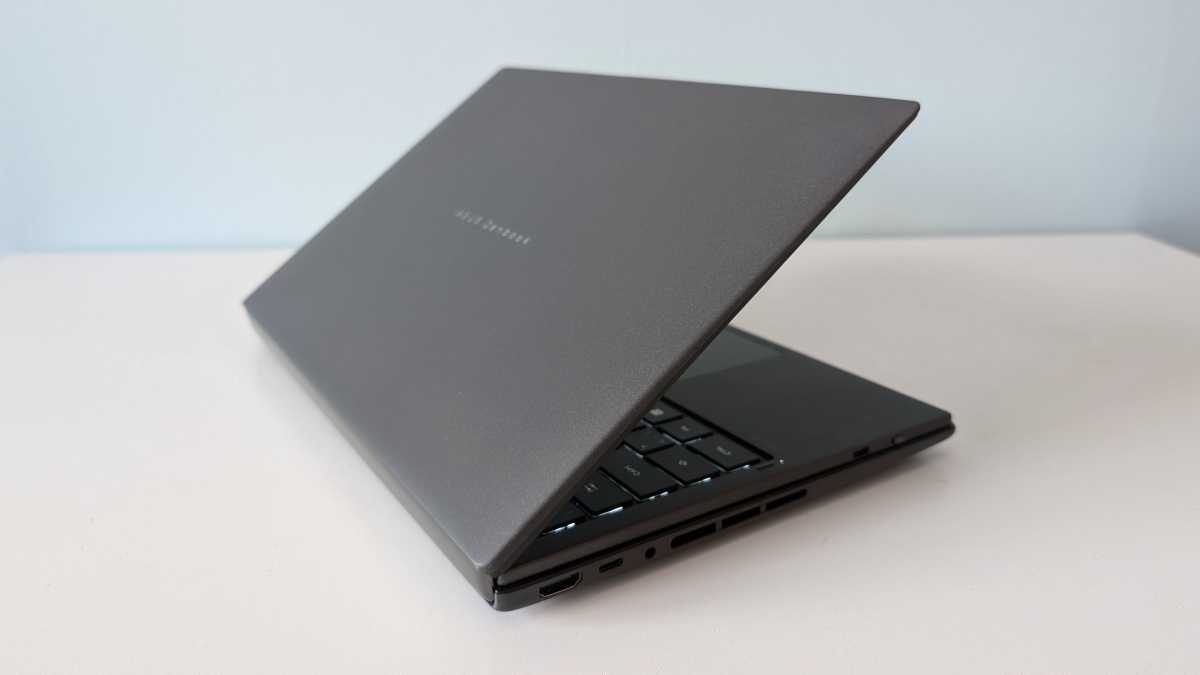
Microsoft recently launched a refreshed lineup of Surface Laptops for Business. It’s a line of 13-, 13.8-, and 15-inch laptops that come with Intel’s Core Ultra Series 300 or Panther Lake processors. Aesthetically, the Surface Laptop 8 for Business and its colleagues are deadly dull, representing essentially the same laptop Microsoft has shipped for generations, spanning years. The Surface Ultra represents an entirely new design.
“We designed Surface Laptop Ultra from the inside out,” Ostrum wrote in a blog post. “Mechanical, electrical, thermal, acoustic, materials, industrial design, and software engineers at the table from day one. The internal architecture and the external form built as one system. Our engineers designed it with the same discipline we know you bring to your craft, where every micron matters and every choice is deliberate.”
OK, the point is clear: The Surface Laptop Ultra is brand new.
Mattias Inghe
The Ultra also solves a fundamental problem with Microsoft’s other Surface offerings.
If I could highlight some of my nerdier testing, Intel’s Panther Lake processor is noteworthy for two things. First, its power efficiency is at the top of the current generation of mobile processors. Second, Intel’s claim that its GPU can keep up with a mobile Nvidia GeForce RTX 4050. Both are true. Still, Intel’s test platforms backed the Panther Lake processor with a massive 99Wh battery and thick, well-cooled designs. In graphics and gaming, Intel’s claims also leaned on its AI frame generation techniques that helped push its benchmark scores higher.
In my ongoing testing, Microsoft’s Surface Laptop 8 for Business simply can’t keep up with other Panther Lake laptops. It doesn’t get cool enough to let the Panther chip really roar. My bet, given the weight of the Surface Laptop Ultra, is that Microsoft is now free of those limitations in this new machine.
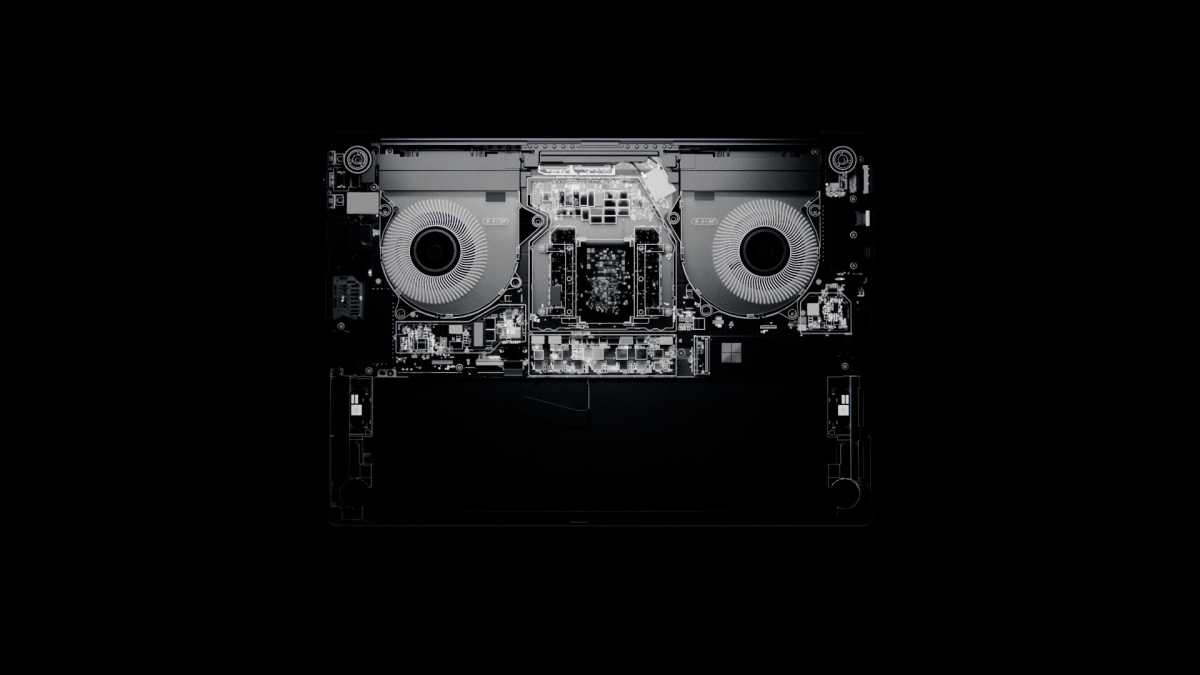
We don’t know too much about the Ultra’s design, but we know that it’s going to be, as the kids say, a “chonky” laptop. It’s “less than 4.5 pounds,” so it may weigh more than the 3.67 pound 15-inch Surface Laptop 8 for Business. It can also last “all-day” on a single charge, but battery size has yet to be defined. In a brief demo video, Microsoft made sure to show us the dual fans underneath the hood. They also tell us that it’s designed for “sustained high performance.”
Microsoft
Microsoft may be feeling a bit sensitive here. My tests of the Surface Laptop for Business 8 show that CPU performance drops a bit under sustained work. In terms of GPU performance — the foundation for multimedia apps like Photoshop, Blender, and AI — GPU performance plunges catastrophically under prolonged load, diving to almost half the available performance. That’s directly correlated to the thermal design, in my book. It now looks like Microsoft won’t make the same mistake again.
There’s more. Microsoft has moved to an entirely new display, the 15-inch PixelSense Ultra touchscreen, moving to a mini-LED design for the first time. Some creators look down on a mini-LED because of the possibility of LED “blooming” as individual backlights are lit. But it all depends on how many individual mini-LED backlights there are, and we don’t know the answer to that question yet. What we do know is that the display supposedly puts out 2,000 nits of peak brightness using HDR, which Microsoft has never done before. We’ll have to see how creators react.
(Interestingly, Nvidia indicated that RTX Spark laptops would ship with “color-accurate tandem OLED displays with Nvidia G-SYNC technology, which the Surface Laptop Ultra doesn’t have.)
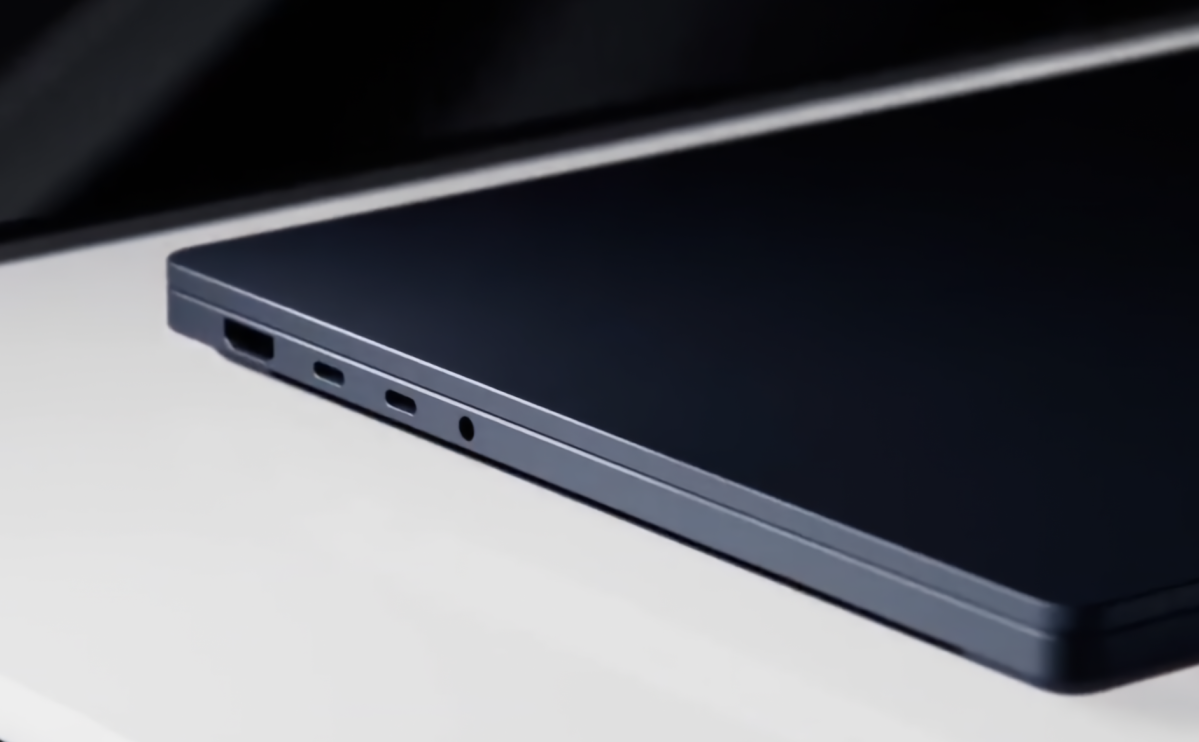
Microsoft also showed off the Surface Laptop Ultra with two Thunderbolt ports, a headphone jack, and an HDMI port on one side, and another USB-C port, a USB-A port, and an SD card slot on the other.
128GB of RAM? In this economy?
Three years ago, GPU performance would be considered a performance story. Today, with all of Microsoft’s work with agentic AI, a powerful GPU has become an everyday assistant, driving agents as they access and modify your files. (Well, Microsoft hopes so, anyway.) On a desktop PC, this isn’t that much of a challenge, as those GPUs include their own dedicated VRAM for AI applications.
Historically, if you’ve wanted to run an AI application on a laptop, the available system RAM was split between the GPU and the PC’s operating system. Component makers have begun stepping in to save the day. Intel, for example, now lets users decide how much memory gets allocated to the CPU and GPU. That opens up space for larger, more complex AI models.
Here, the Surface Laptop Ultra’s AI productivity power is decided by two things. First, the size of the pooled memory is enormous. It offers users a shared pool of up to 128GB of RAM, a ludicrous amount amid ongoing shortages in PC memory and storage. Second, Microsoft is working within Windows to deliver “a new higher, smarter limit on total system memory accessible by the GPU.” To me, that sounds like Microsoft is taking the work done by Intel and others and formalizing it within Windows, allowing you to tweak your AI and productivity applications how you’d like.
In total, Microsoft says that you’ll be able to run AI models of up to 120 billion parameters on the Surface Laptop Ultra. Microsoft is also working to increase the size of the memory pages AI accesses, so that continually loading the same token history can be accomplished more quickly, in bigger chunks.
Nvidia will be bringing its OpenShell application to Windows, bringing in new Windows security primitives. Hermes Agent and OpenClaw will integrate OpenShell and these new primitives, Microsoft said.
Keep in mind that Microsoft’s management is seeing Apple’s Mac minis (running on Apple’s own Arm chip architecture) being snapped up as dedicated boxes to run agentic AI. Microsoft wants a piece of this pie, too.
And it’s getting a bit greedy: Pavan Davuluri, the executive vice president in charge of Windows + Devices, told me that the size of the shared memory pool means that Microsoft is targeting both agentic AI as well “all the other things that an end user might be multitasking with.” No dedicated AI box here — the Surface Laptop Ultra is designed as a “do it all” PC.

Microsoft
Was Qualcomm’s Snapdragon just a trial run?
Sorry, Qualcomm. It’s possible that this has been the moment Microsoft has been working toward with all of its efforts with Windows on Arm.
At press time, a report from VideoCardz indicated that the Nvidia N1X contained 20 CPU cores, split equally between Arm’s Core X925 cores (which they began showing off in 2024 for AI applications) and the Cortex A-725. There’s also a reported 18-core (9+9) variant, plus N1 configurations with 8+4 and 7+3 configurations.
Just dealing with the permutations of the Nvidia Arm architecture appears to be why the N1X, and the Surface Laptop Ultra, are shipping in 2026 rather than 2025.
Microsoft said that it has worked to enable the Windows scheduler to work in conjunction with all of the cores at once, and to improve the Microsoft Power and Thermal Framework, which routes power efficiently back and forth between the CPU and GPU. From an application perspective, Microsoft also worked with application and games makers to ensure that their code was optimized for the N1X and RTX Spark, and that Microsoft’s Prism emulator was tuned to step in and accommodate any issues.
Mattias Inghe / Foundry
Frankly, application compatibility doesn’t appear to be the issue here. In my own use of Windows on Arm laptops, I’ve been able to use pretty much everything flawlessly, save for games.
What we don’t know are the fundamentals. Aside from the impressive GPU numbers, how fast is the N1X and the Surface Laptop Ultra? How much power will it draw? And, more importantly, how much will you pay? Microsoft has always charged a premium for a Surface device, and 128GB of memory could raise prices to stratospheric levels.
Still, one thing is clear. We’re talking about Surface again.
