The AI-augmented images are also controversial as heck.
When Nvidia first unveiled DLSS 5 in March, gamers recoiled at the AI-enhanced character makeovers, which sometimes made familiar faces look like entirely different people. Some developers reportedly didn’t even know their games would appear in Nvidia’s showcase. The Hogwarts Legacy implementation looks considerably more restrained, following a summer of Nvidia stressing that DLSS 5 will have intensive develop controls.
More magic, less meddling

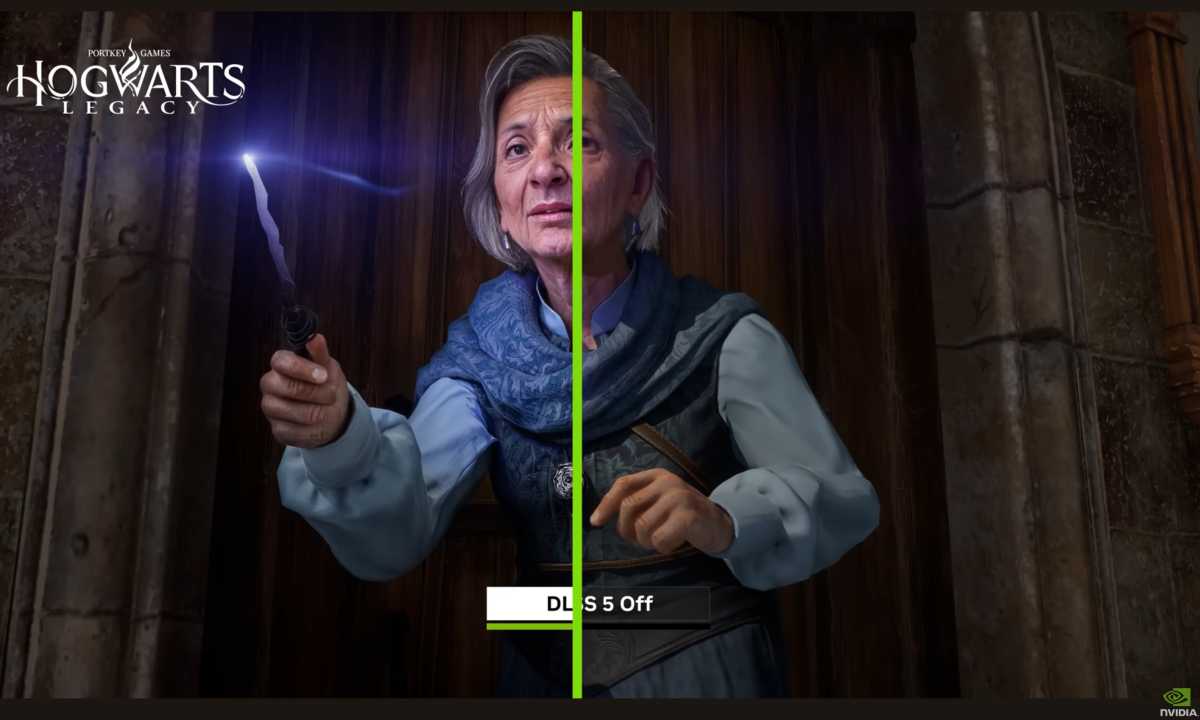
The original Hogwarts Legacy implementation in DLSS 5’s launch trailer in March made characters look atrocious, like they’ve been passed through a yassification filter.
Nvidia / YouTube
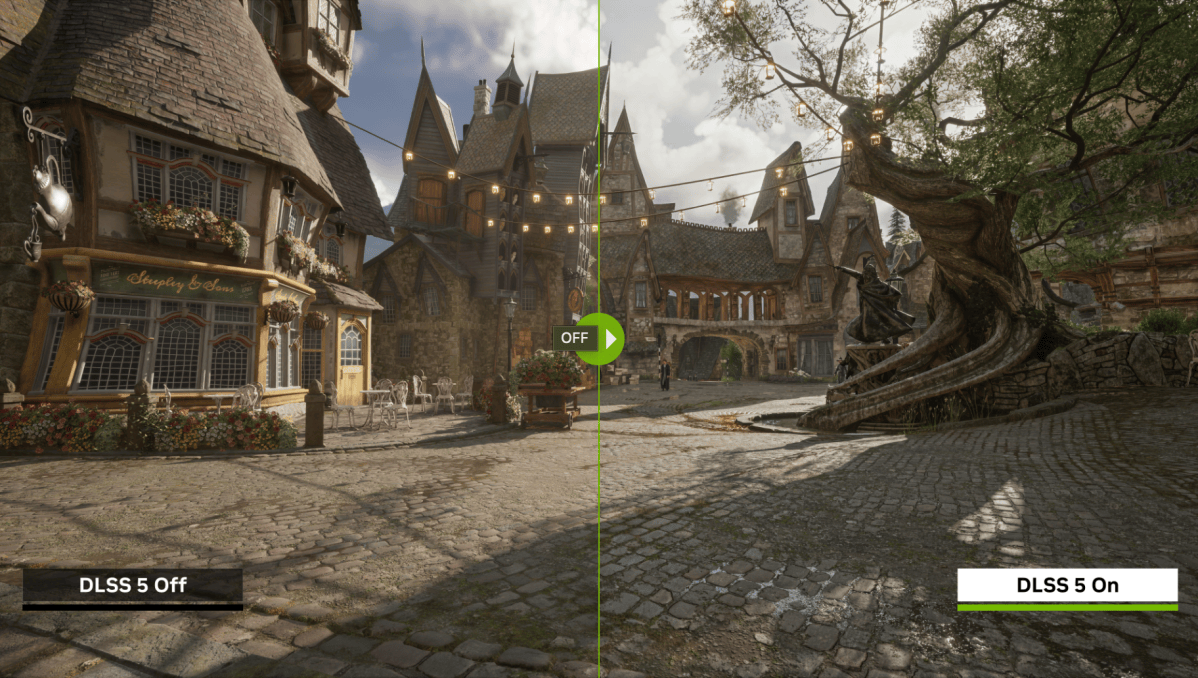
Nvidia’s official before-and-after comparisons show richer lighting and deeper shadows throughout Hogsmeade. Moss stands out against weathered rooftops, foliage casts more convincing shadows, and the stonework gains an almost tangible depth. Character changes are subtler, without the dramatic facial transformations that kicked off the original uproar — at least in the promotional images.
Avalanche Software worked with Nvidia to dial things back. DLSS 5 lets developers adjust lighting and structural detail independently, choose different neural models for different scenes, and use masking tools to keep the AI from mucking with specific objects or characters. Avalanche says it fine-tuned Hogwarts Legacy’s environments, lighting, and skin details to preserve the game’s original artistic vision.
Good! Because making a game look more realistic doesn’t necessarily make it look better.

Nvidia
I got an early look at DLSS 5 in NBA 2K27, and the lighting and character detail were genuinely startling. NBA players looked almost like their real-life counterparts.