Welcome to the Boost Mode newsletter. Every week I share my insights on PC gaming, desktop setups, and hardware optimization. I also track down some of the most interesting PC and nerd news from around the web, plus a PC game pick you might not have seen elsewhere. Want this newsletter to come directly to your inbox? Sign up on our website!
Table of Contents
The history of these weird little half-keyboard things
Belkin released an odd little gadget called the Nostromo Speedpad N50 waaaaaay back in 2001. It was almost laughably simple, just ten regular keyboard keys and a D-pad, plus a scroll wheel. But it was the addition of a grip, designed specifically for the left hand that typically hovers over the WASD area, that made it interesting. As an alternative to a full-sized keyboard, a companion device more than anything else, it was compelling.

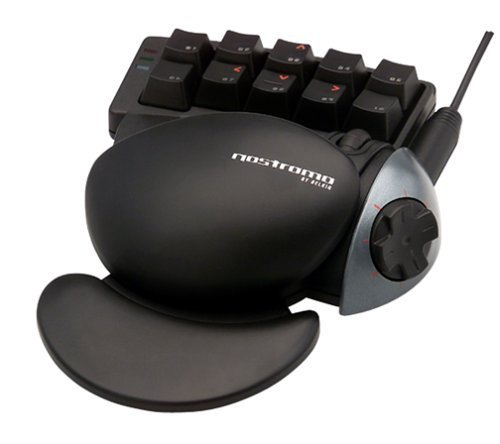
Belkin
Belkin followed up the initial model with the N51 and N52, which look a little more like the modern versions. The Nostromo N52 “Tournament Edition” is the one that I picked up a few years later, and still love dearly. There are a few innovations worth highlighting compared to the initial model: it now has three rows of primary keyboard buttons (though still pretty limited at just 14), a bit of a stagger for your pinky finger, a dedicated space bar and alt button within reach of the thumb, and a removable circular pad to make the D-pad feel more like a joystick.

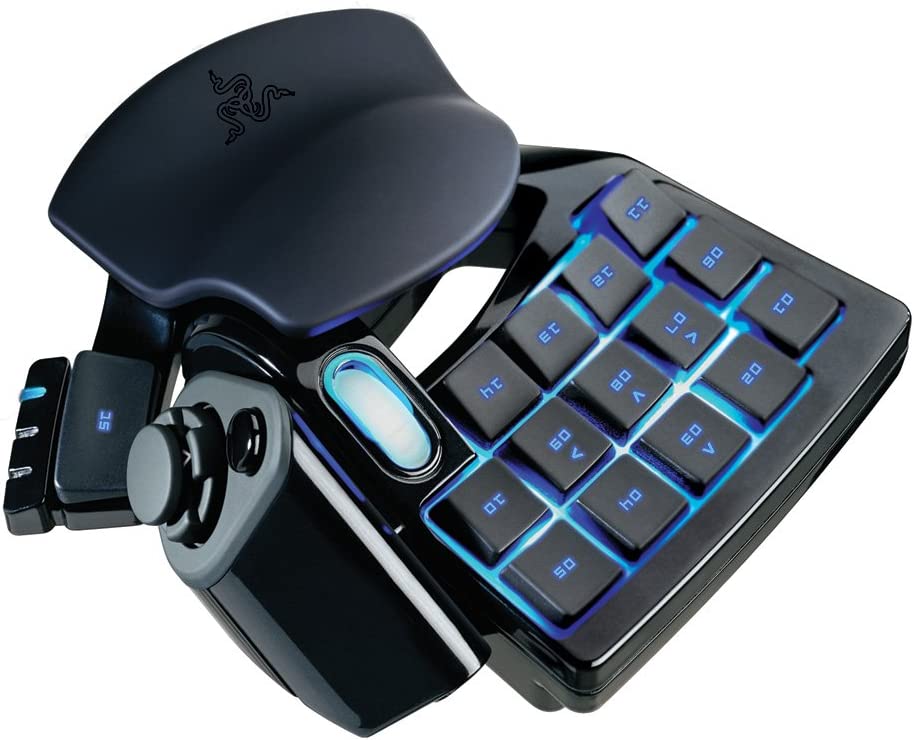
Razer
This model turned heads. It looked futuristic, something that might feel at home in a spaceship cockpit. (In fact, it’s shown up more than once as a sci-fi prop!) It turned some particular heads at Razer, which bought the N52 TE design and rebranded it, unchanged, as the “Razer Nostromo” in 2010. It eventually morphed into its modern brand: the Tartarus. In fact, aside from the extra row of keys and a little more padding, the recent Tartarus V2 looks almost identical to my Nostromo from way back then.
Razer has made so many of these
This family of left-handed keyboards has been iterated and improved upon for 16 years, adding more buttons, full mechanical keys, better software and support, and of course, RGB lighting. It isn’t the only one of its kind — Logitech has tried its hand at one-handed boards with the G13, and I could tell you about approximately a dozen others, from such brands as Wolfking and Hori. They make so much sense, functionally: Not only do they allow for more specific, gaming-oriented ergonomics for keyboard-and-mouse games, they let you use different switches for typing and gaming.
Gaming is such a different activity than normal PC use, why wouldn’t you have different gadgets for it? Unless you’re some kind of crazy person. Writing on the internet. As we do.
But Razer’s Tartarus remains the most visible example. I might say something dismissive about Razer’s bombastic branding here, but in this particular instance I have to give credit where it’s due. The company has been diligently and patiently improving its one-handed pad for all this time. The latest version is the Tartarus V2 Pro, which costs a whopping $200 (2.5 times the non-pro version).