
TMR keyboards work nothing like the one you’re typing on
TMR switches, short for Tunnel Magnetoresistance, are regarded as one of the most exciting developments in mechanical keyboards. They do not operate via conventional contact points, nor do they use traditional Hall-effect sensors.
Instead, they measure changes in magnetic resistance, doing so with significantly greater precision. This results in a more finely controllable actuation, opening up new possibilities for both frequent typists and gamers. But what does this mean in practical terms, and how can you make the most of the benefits of a TMR keyboard?
A keyboard with TMR technology operates entirely without contact, ensuring greater reliability in the long term. As there are no metal contacts to wear out, the typing feel remains consistent, and the actuation characteristics hardly change. Furthermore, the keyboard can measure every keystroke precisely, enabling extremely low actuation points if desired.
To make this work, there is a sensor beneath each switch that registers magnetic changes with very high resolution. This allows for finer tuning than Hall-effect switches or what conventional mechanical switches offer.
If you want to get the most out of a TMR keyboard, it’s best to start with calibration. Many models offer automatic calibration of each switch via the accompanying software. This ensures that all keys deliver uniform values and that the actuation behavior is consistent.
Afterward, it is advisable to adjust the actuation distance. Depending on the intended use, an extremely low point of 0.2 millimeters may be appropriate. For instance, this works for quick reactions in games. For precise typing, however, a slightly longer distance is preferable to help prevent unintended inputs.
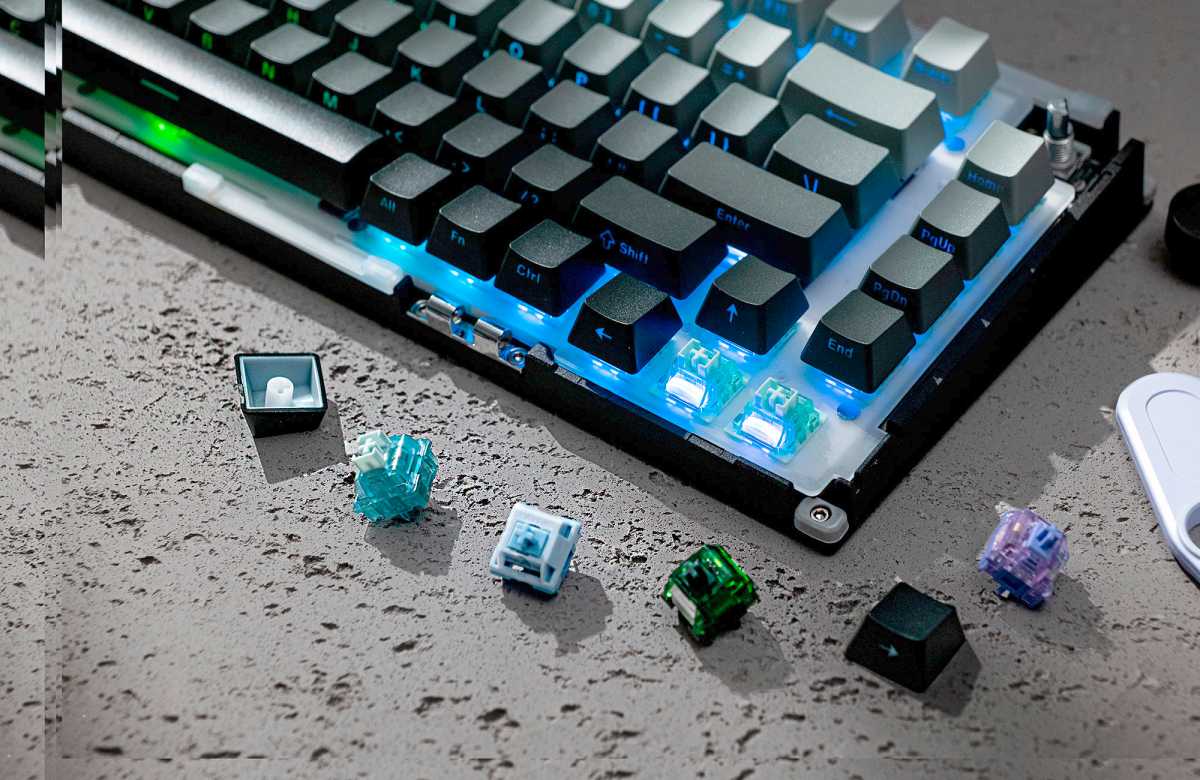
TMR keyboards – such as those from Monsgeek – enable particularly precise and fast input. The switches utilize magnetic fields instead of mechanical contacts.
Monsgeek
Another advantage of TMR switches is the ability to link different functions to different actuation depths. Some keyboards allow multiple actions to be assigned to a single key, such as a light press for a basic function and a deeper press for an alternative input.
Those who work productively or wish to perform complex gaming actions can become significantly more efficient as a result. It is important to configure the functions conservatively at first and only use more complex multi-stage profiles as experience grows. As TMR keyboards are contactless, they also benefit from very clean signal processing.
The typing feel is clearly defined, and actuation is precise and free from bounce errors. Care and maintenance are also easier. Dust or dirt have little effect on the mechanism. However, the keyboard should still be cleaned regularly, especially if it supports hot-swapping and switches can be changed quickly.
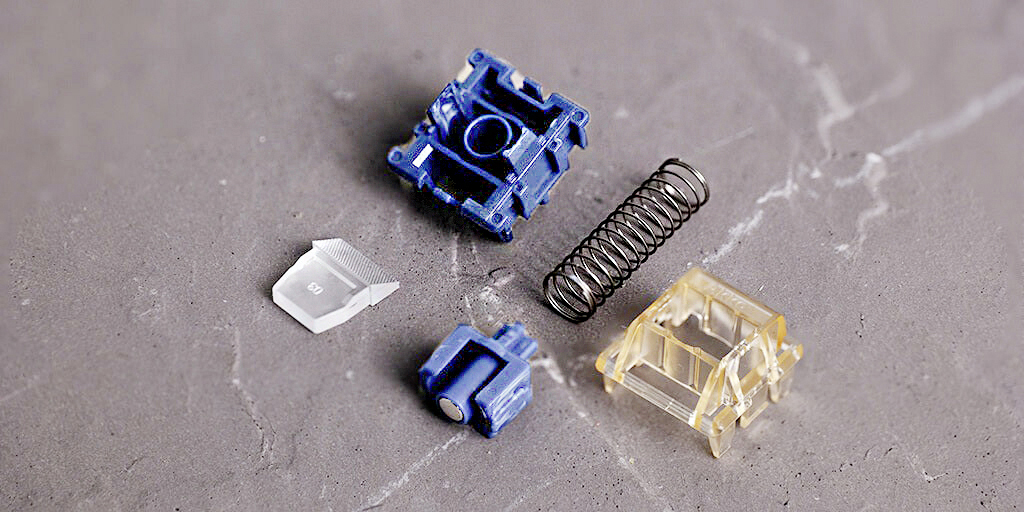
Disassembled TMR switch components (shown here by Akko) reveal the magnetic sensor technology that enables particularly precise and durable keystrokes.
Akko
Anyone who switches between different typing styles or games should also create profiles. Most TMR models store multiple layouts directly in the device, so that sensitivity, actuation point, and special functions can be adjusted at any time. It is precisely this flexibility that makes TMR keyboards so versatile.
All in all, keyboards with TMR switches offer a more precise, durable, and adaptable alternative to traditional switches. Those willing to make full use of the software features and experiment with different settings will get the most out of this new technology and end up with a keyboard that can be tailored precisely to their own needs.
